


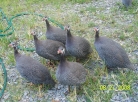
Guinea HensA Summer Homeschool Project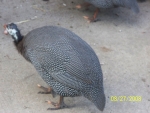 Why Guinea Hens? Simple, I strongly dislike ticks and we have a lot of them every spring and summer. Guinea hens are notorious for being great tick eaters. I also like birds. While some might consider chickens first in this case, I read that chickens scratch and can tear up a garden but guineas supposedly don't. Just so you know and are not mislead, guineas do scratch, too. Why as a School Project? I believe it is a good thing for my children to have responsibilities and to be able to experience living science first hand. Since we have a farm, I also believe it would be a shame not to use these life experiences as part of our school. On this page we will share some of the things we have learned and experienced with guinea hens during this project. Also, be sure to watch the video and check out the pictures. Baby Guineas The guinea hens arrived into our lives when they were one day old. We ordered a batch of guineas with some friends and split the cost. We ended up with seven guinea hens each. Taking Care of Day Old Guinea Hens The first thing we had to figure out was what to do with these tiny little creatures. They cheeped and slept and made messes. They needed warmth, light and warm water. The source of the warmth was to be close but not too close, warm but closer to hot at first and needed to get cooler as they grew. They also needed food. Though there are many ways to accomplish this, from homemade boxes to store bought incubators, here is what we did. 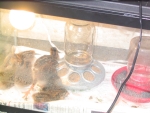 Our Guinea Hens First Home If you have seen our summer homeschool aquaponics experiment, you know we have fish tanks. Before one of those tanks was part of the aquaponics trial, it was a guinea hen incubator. Yes, we used a small fish tank aquarium. For the light and warmth we used the bulb in the aquarium lid. After testing and watching the guineas we knew they needed more heat. We then added an extra attached light. We used a thermometer to check the temperature. It stayed around 95 degrees. The aquarium bottom was then lined with newspaper. This worked good at first. As they grew though we switched to cedar chips. DON'T use cedar chips. We did because we didn't know that they can be toxic to birds. Our chicks survived but they sure did act funny for days; running and chirping and acting like they were a tad spastic. We thought that could be normal. After about two weeks we re-read the directions that came with the birds which informed us not to use the cedar chips. We then replaced the chips with corn cob pellets. The guineas sure didn't seem to enjoy that as much but at least we weren't poisoning them anymore. To adjust the light source, we started with a 60 watt bulb close to the chicks as they grew we lowered the light bulb wattage and raised it higher. For the warm water, we kept refilling a water container with warm water. If they were panting and carrying on we changed the water. This was often several times a day during the first couple of weeks. One other consideration that we had was what to do with the cat if she showed too much interest in the baby guinea hens. Fortunately, our cat was content just to watch them with a hungry stare. What probably prevented her from trying to get them was that we did have the lid on the tank and secured it down with duct tape. NOTE: They would huddle together and fall asleep. Just like a Mom, I would check to make sure they were breathing. It was intense the first couple of times, because they would be chirping away, scratching, eating and drinking and the other thing and then all of a sudden they would all go quiet. I would rush over to make sure they were ok and they were always just sleeping. Soon they would wake up and start the process again. So I wanted to tell you they will all go to sleep together. It's ok. Relax. Handling the Guinea Hens Guinea Hens are wild by nature and I wanted them to be as tame as possible. Primarily, I wanted them to be tame so that we could keep them from running off once they were put outside to free-range. In order to do this, all the things I read encouraged handling the birds often during the first several weeks. We did this. My daughter and I would pick them up, hoping we picked up all of them, and talk to them. We let them perch on our fingers and just enjoyed them being babies. Oh so cute. This was great until the got bigger, heavier and started to fly. (The reason we hoped we picked all of them up was that we couldn't really tell them apart from each other, except for one.) Warning: They make messes even when you hold them. Be certain to always wash your hands after handling birds of any kind or after cleaning up after them. Warning #2: Once they can fly, they can also run and they are fast. I wish I had a video of us trying to catch them running around our front room. Antics of the Babies One of the babies, would stretch up his head and neck often. We called him Stretch. Though it is not really possible for us to be sure it was a male, we felt that this one acted significantly different from the others. So either we had one male and six hens or vice-versa. Later another one started to do this also and we decided we had two males. It was great fun to watch them grow. They grew fast. From week to week they grew noticably bigger. The Guinea Hens 2nd Home After about two weeks, they were getting too big for the aquarium, so we needed to get them a bigger place. My husband brought home a huge box. We lined it with the corn cob stuff, made a lid out of chicken wire and moved them and all their accessories in. They enjoyed the extra space. We attached the light to the top of the box and made an opening for the light in the wire lid. By now, they were losing some of their baby good looks and starting to get feathers. Every day they seemed to grow and try to do a little more. Just like my children, as they grew their voices got louder too. I could now hear them at the other end of the house. The Guinea Hen Hotel Within a couple more weeks, they were beginning to outgrow their second home and we added a 2nd story, with wire mesh perches. We called this the Guinea Hotel. It was two boxes of the same size put together to make it two stories tall. The bottom of the top box had the long flaps hanging open (they can be cut off) over the sides of the bottom box. The smaller bottom flaps went to the inside and were supported with wire mesh for perches. Eventually, this became a mess. We took the cardboard flaps off and just left the mesh for the perch. This worked much better. To keep them in the box we used the wire mesh top. About this time, we started giving the guineas field trips to the great outdoors. Once or twice a day, depending on the weather (needed to be warm) we took the whole box setup outside. We watched them carefully for signs of stress, panting, huddling in a corner or chirping loudly. After a few days of this, we took one or two guineas out of the box and let it roam around outside. We found that one guinea out did not work as well because the lone guinea would just walk or run around the box wanting back in. When we took two out together, they would adventure a little farther away. This was over a period of a few weeks. Occasionally, we would let them all out. But there were new dangers with the outside environment. The dogs. The racoons. The foxes. The hawks and more. We needed to be extremely diligent. The dogs needed to be disciplined not to chase the guineas. Another point to remember is that now they were able to fly a little and they are really hard to catch. We also found out that if they get into trees or bushy areas they are hard to find. Unfortunately, for us, that is almost our whole guinea zone. Finally, a Guinea Hen Pen Our new family project this summer was to make the guinea hen pen. As they grew it became ever more obvious that they needed to be outside and the sooner the better. We needed to wait until the nights stayed above 70 degrees but other than that it was time for them to go outside. My husband and I searched the internet for plans and finally decided to make our own. Actually, my husband made the plans. I just gave suggestions. I'm really good at that. lol Since the plans were in his head, I had trouble visualizing what this was going to be like. I let him and the children put it together. Oh, I did occasionally help by holding up an end or moving it but that was about it for me. My important suggestions.....hmmm. 1. Make it so that the coons can't get in and the birds can't get out. Remember racoons can open just about anything and they do that team work thing. 2. Small holes on the chicken wire, we don't want headless chickens.(Coons will grab a head through the holes if they can) Yes, EWWWW. 3. Make sure you drink lots of liquids. It was hot outside. 4. What are you doing again? This was a suggestion because it made him explain it to me again and reinforced it in his mind. This helped him to see the areas that needed to be tweaked a bit. I was glad to help. It turned out great! 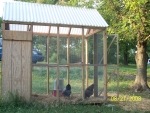 Male or Female? Are you wondering how to tell a male guinea from a female guinea? I wanted to know. This is what I found out but I'm going to warn you, unless you only have one or two guineas or have some amazing powers of observation, this advice isn't going to help you much. Here it is: Female guineas make a "buckwheat" noise, the male guineas do not. They both chirp. Now they do mature at about 6 months of age and the hens will lay eggs. So if you see a guinea hen laying an egg, it is a female. Also, as a side note they won't lay eggs during the winter, so if like ours, yours mature in November, you won't even have a chance of seeing a hen lay an egg until spring. I have decided to just accept that I will never know for sure exactly how many males or females I have. I do know I have females. Listen close to the video. I have also decided we have two males based on behavior. This is probably not an accurate method, so I won't tell you what behaviors I am basing this on. Funny Guineas We have found the guineas to be amusing birds. I enjoy having them on the farm. It is funny to go outside and when the guineas hear us, they come running at us. They won't let us touch them but then they follow us around the farm, eating, chirping and making messes. The dogs clean up...yes, Ewwwww. They are loud but I always know where they are....if I can't hear them, I yell, "Hey Guineas!" and they start squawking and carrying on and come running. One day, they didn't get put up in the pen before dark and they roosted in a tree next to the pen. We tried to get them down but no matter what we did they wouldn't budge. So we left them there and prayed they would all still be there the next day. They were, of course. Here is a funny story I wrote to some friends about the guineas when they were still inside. It is a bit exaggerated but I hope you will enjoy it anyway. The following story is not for the faint of heart. A Guinea Horror Story The following story is not for the faint of heart. Ok -that was a fair warning...if you are still reading the only other thing I can say is, "Sorry, I write really strange stuff when I'm tired and I'm tired." It was a dark night (yes, I know every night is dark), but this was really dark because I turned off all of the lights. Why, you ask did I turn off the lights...well let me tell you. My family and I had just returned from a seemingly long trip that was in actuality only 1 day long...but it was late and after taking care of the critters, the rest of the family quickly headed to bed. I, however, had just sat down at my computer to do computer things when I heard a scratching noise coming from outside. Something was clawing at my door. Wanting to get into my house. Did I think , what strange creature is trying to invade my home? Is it a demon or a dragon or a vampire or worse-a coon? No, I thought, I've got to get my email. The scratching became louder and louder. Email. I have to get my email. I tried to ignore the scratching until finally I could no longer do so and promptly got up and let the cat in... Unbeknownst to me when I opened the door the cat was not the only creature to sneak into my house. So I resumed my computer activities and then... I heard it. A very loud.... Buzzzzz. Buzzzzzz. No, I screamed (Inside my head-I really didn't want to wake anyone up) there is a horsefly in the house. For some people the thought of being bit by a tick or by a snake or a poisonous spider is enough to send them screaming and doing wild dances but who also wouldn't do whatever they could do to avoid the painful bite of the horsefly. I had to get it before it got to either me or my family. It is good to know that my mothering instincts are alive and well. Quickly, I shut off the lights in the hallway and the family room. I was even prepared to (gasp) turn off the computer screen, though I knew I would only do that if it was necessary. The only other light left on was over the guinea hen pen. The trap had been set. Then I watched in horror as a harmless moth could not resist the lures of the light. It fluttered over the pen and went in...it was a combination of Jurassic Park and a Norman Bates shower scene in my living room complete with eerie shadows of beating wings and insistent pecking. I couldn't watch...ok I did peek a little. I heard the buzz again. It's coming. Buzzz. Closer now. Not wanting to witness another scene, I returned to my computer. May the innocent loss of moth not be in vain, I thought. Buzzzz. Buzzzzz. Da Dunt Da Dunt Da Dunt Buzzz. Beating of wings. Pecking, pecking, pecking in the box. Happy chirps. The End. Moral of the story (I know, horror stories generally don't have morals to their stories...but this one does-but it really applies only to flying bugs): Don't fly into the guinea hen pen because what flies into the guinea hen pen, never flies out. Cue: Eerie music I warned you! However, I do hope you enjoyed this edition of Guinea Hen Horror which will hopefully find many opportunities to be replayed over and over. Chickens and Guineas Guinea buddies? Not!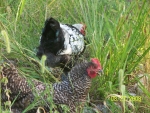 Over the course of the summer, we decided to get two laying chicken hens. I gave up my concerns about the garden and focused on the benefits of adding the hens. Chickens provide eggs and will help eat bugs. These two things outweighed the potential garden scratching. As it turned out, we ended up with a rooster and a hen. The hen lays an egg either every day or every other day. We're not sure because the puppy keeps finding the eggs before we do. Yes, he goes through the hole in the chicken coop to get to the nesting box. My question before we got the chickens was could they be housed with the guineas. The answer is, yes, as long as they are about the same size. Our chickens were a bit bigger than the guineas but they adjusted. The first couple of days, the chickens needed to stay in the pen. We lost one, because the dog, tried to investigate it and it ran off and never came back. The guineas kept a respectable distance from the chickens, in other words they huddled in a corner until they got hungry or until they were let out. They did this for a couple of days. Then the pecking order was established and while they don't hang around together on the school yard, the chickens and the guinea hens co-habitate well in the coop. What Did We Learn From Raising Guineas? Be responsible, and keep their pen/box/hotel clean. Guineas mature at about six months of age. It is difficult to tell a male guinea from a female. The females make a loud, "Buckwheat" sound when alarmed. Guinea hens are wild birds and though they can be tamed they will not likely want to perch on your finger for long. And it is unlikely you will want them to perch on your finger after they are about eight weeks old. Insects are in danger when guinea hens are near. Guineas do scratch the ground, peck each other, have a pecking order, and make messes wherever they want to make a mess. They are entertaining to watch. Dogs like eggs. Guinea hens and chickens can live together but should not be expected to be buddy buddy with each other. Like all living creatures they need to eat, drink water and have a good shelter. Guinea hens will huddle together and can break out of the pen if necessary. 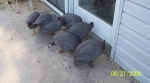 Thanks for reading about our experience with Guinea hens. You can check out more about our Summer school or about this site from the homepage. Go from Guinea Hens to the home page.
|

by
JulieD
JulieD
To Teach
Is
To master
To master
Is
To know
To know
Is
To live
To live
Is
To share
To share
Is
To give
To give
Is
To Teach
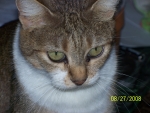
Can I have just one?
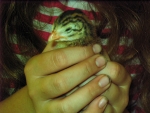
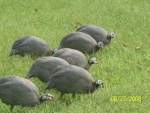
Do we look like trouble?

Egg finder or Egg Thief?